Thursday, October 10, 2013

David Mason| We Lost A Great Man Last Week


Our family joins the Mason/Maddox family in mourning the loss of David Mason.  David Mason was a husband, father, son, brother, friend, mentor, active minister in his church, involved in his community, and so much more.  He also worked for our company, Peak Pest Management, as his clients’ favorite pest control guy.  For those he served, he was requested as the guy to come back for any further pest control, or to treat a friend, neighbor, or parent’s house.

David was the kind of guy who made an impact on the lives he touched.  Asking questions, having real meaningful conversations, letting people know that they were important and just genuinely caring about the people who are around him are some of the ways David impacted people.  He had a unique way of interacting with people and getting to their heart.  He was studying to be (and naturally made) an excellent counselor.  Whether you knew David for one day, or all your life- one thing is for sure, you know that he cared about you.

When he started working for us, as our first employee, he said that he wanted to be a part of building the foundation.  And he was, he will always hold a special place in our hearts and his impact on our lives will not be forgotten.  David taught us more than he could possibly realize, and he has helped us to grow, not just as a business, but as individuals.  David's impact, and his legacy of loving and caring about people will live on through the many lives that he touched.

We attended David's memorial service yesterday, and the place was packed- many people stood through the whole service.  Everyone who stood up to speak about David, whether family, friend or acquaintance- they talked about how much he loved.  Many people's lives have been changed for the better, just for having David in it.

David left behind a wife and two young daughters- there is a memorial fund set up, for those who want the help his family get through this difficult time.

David left behind a legacy of love and a life well lived.

*Photo Credit to where it is due, this is not my photo, it is the photo used for his memorial service and is the photo on the memorial fundraising site. 

Monday, July 15, 2013

Spiders Called Goliath: Goliath Bird-Eating Spider

You know when something is called Goliath it is going to be big.  Well, when it is the Goliath Bird-Eating Spider, this translates to dinner plate sized.  Not dessert, not salad, nope full on dinner plate sized folks.  That is one monstrous spider.

Although research shows they rarely eat birds and mainly focus on insects, these spiders are capable of making a meal of rodents, frogs, lizards, bats, birds and even some snakes.  The Goliath Bird-Eating spider will not seek to attack a human, although they will bite and/or throw nasty barbed hairs.  I hear the bite is similar in affect to a wasp sting.  The hairs cause an itchy rash on the skin and can damage eyes and mucous membranes.

With inch long (give or take) fangs these spiders make a formidable foe and despite being nearly blind they're pretty good on the defense too.  Check out this youtube video by National Geographic.


From a pest control stand point, these guys aren't an issue.  In fact some people choose to keep these and other tarantulas as pets.  The Goliath Bird-Eater is native to northern South America, so we North Americans should not run across one of these guys in the wild.  Pet stores? Maybe. Backyards? Unlikely- unless your neighbor had a pet and turned it loose in your yard!

If you're dealing with pest spiders as unwelcome guests in your home, give me a call and I'll be happy to help you out.  In fact we, at Peak Pest Management, are running a summer special.  $99 for inside or outside spider treatment.  Same deal with ants.  Bees, wasps and yellow jackets are also typical summer pests.  We'll remove a nest for $99 or you can get a full treatment with a guarantee and not have to worry about these stinging pests in your yard!

Micah Wood
Peak Pest Management LLC
www.peak-pest-management.com
503-998-4322
360-607-1933

Tuesday, June 25, 2013

Mosquito Eaters- The Truth Is Out

Mosquito Eaters: The Truth is Out.  They Do NOT Eat Mosquitoes.


Mosquito Eater, Mosquito Hawk, Crane Fly, Giant Mosquito...  Did you grow up calling them mosquito eaters?  I did.  And it wasn't until I began learning more about pests and pest control that I found out the truth...  They do not eat mosquitoes.  In fact, the larva, often called leather backs, can be a pest that chomps down on the roots of plants.  Have you ever noticed brown patches in the lawn?  It could be caused by crane fly larva destroying the root system of the lawn.

Do Crane Flies Bite?

No.  Crane flies, unlike their tiny look-alike, do not bite. They really don't do much of anything.  They don't live very long, they don't eat your yard or other plants, they just mate, deposit eggs and die.  The depositing of eggs is the problematic part.  Because as the eggs hatch into larva and the larva begins to eat, the root systems of your lawn could be at risk.

Are Crane Flies Helpful? 

Crane flies are not actually helpful as far as eating other pests etc.  Crane flies do not eat mosquitoes, they do not kill mosquitoes, they don't eat or kill any other bug.  So all those years of people telling you, leave that mosquito eater alone, he is going to eat mosquitoes.  Yeah, not true.  You could have killed those suckers and it wouldn't have made one bit of difference as far as mosquitoes are concerned.

Are Crane Flies Going to Hurt Me?

 
 Well.  They are a nuisance pest if they flock indoors.  To keep crane flies out, keep screens in good repair, and keep the screen doors shut.  If they come in, they are not going to hurt you.  They won't bite you.  They may flap and flutter around in your face and annoy you, but they won't hurt you.

Pest Control Issues?

Are you dealing with a pest?  I'm not just talking about crane flies at this point.  Ants, Bees, Fleas, Spiders, Mice, Rats, Bedbugs, Carpenter Ants, Termites, Flies, Wasps, Yellow Jackets, Hornets?  For all of your pest control needs, Peak Pest Management offers the affordable local option. 

Micah Wood
Peak Pest Management LLC
503-998-4322
360-607-1933


Tuesday, June 4, 2013

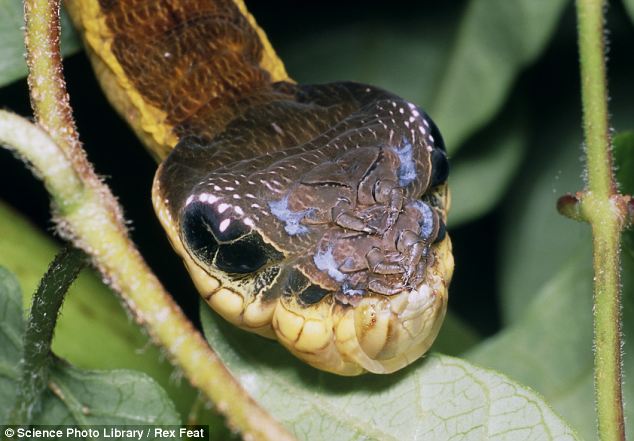
Caterpillars That Look Like Snakes! Need a New Phobia?

Snakerpillaphobia- the fear of caterpillars that disguise themselves as snakes.
 Yeah, I totally made that up, but who's with me, these guys are a little more than slightly creepy.  I mean look at them!  Go ahead, watch the video.


This video appears to be of the snake mimic hawkmoth caterpillar.  They are not really found in our part of the world, so if these guys are keeping you from a picnic, rest assured, you'll not likely find one here in the greater Portland area.  The picture below is identified as a snake mimic hawkmoth caterpillar over on Mail Online.


Now I do have to say, as a pest control professional, in my research of this creepy crawly, I found far creepier caterpillars that can do things like spray acid and hook poisonous barbed hairs into a person (or predatory creature).  

I know you won't be calling me for these guys, but if you're having issues with other pests give me a call. The typical summer pests include bees, spiders, fleas, wasps, yellow jackets, ants and rodents.  Plus bedbugs are still bugging people around Portland, Vancouver, and surrounding areas.  I'd be happy to help with any pest issue you might be dealing with.

Micah Wood
503-998-4322
360-607-1933


Tuesday, May 7, 2013

Zombies, Mind Control, Zombification Antidote-- On a Pest Control Blog?

Zombies are walking the Earth as we speak.  Their minds are overtaken and they are driven for the purpose of creating more zombies.  Sounds like science fiction, but it is just plain science and it's a fact.  The Zombie Antpocolypse is upon us.  And nope, that wasn't a typo.  I'm not talking about human zombies, I'm talking about ants... Of course!

You may remember that I've written about this before, but it just so happens that I came across an article (to read it, click here) of hope for Zombie Ants.  Okay, well the truth is there isn't hope for those already overtaken-- but there is hope for their colony.

If you read my previous post about Zombie Ants, you may remember that the zombification process is started by a parasitic fungus that takes over the ants brain causing strange and unexpected behaviors. Scientists believe this is caused by the release of neurotoxin that disrupts normal ant behaviors.  Ants that typically march in rows will stumble, walk circles and then at around noon, clamp their mandible on a leaf stem or branch, where they will hang (and die) until the fungi sprout out of the ants head and release more spores into the soil below for unsuspecting ants marching by.

It appears that there is an antidote.  It is a parasite to the parasite that works to neutralize the fungus before it can release spores to infect more ants.  The parasite to the fungus is a secondary fungus that effectively coats the first fungus, preventing it from releasing spores to infect more ants.

For your viewing pleasure, we have created pictures of what really happens vs well, you know-- what you imagine the Zombie Antpocolypse to be like (please excuse the missing "e" in the second picture... apparently it has fallen victim to the zombies!!!)...  And then finally, a video made  by the BBC on Zombie Ants.


Thursday, March 28, 2013

What is Killing the Monarch Butterflies? Surprising Answer!


I was reading over on the Kentucky University's Blog, The Daily Entomologist and came across a really interesting blog post by Chip Taylor, director of Monarch Watch.  The title, We're Starving the Monarch Butterflies, caught my attention.

I was thinking this post would be about deforestation but it wasn't.  There was a link to this press release.  Which talks about Mexico's protection of the Monarch Butterflies and their sanctuaries.  The problem lies within the united states and Canada.  And we aren't starving them by deforestation-- we are starving them by planting crops.  Surprisingly the crops are not for consumption but rather for the making of "GREEN" bio-fuel.  The environmental cost, (not even considering the cost of competing for crop space with crops grown for food) of bio-fuel may just be higher than people once thought.

The reason the bio-fuel crops of soy and other crops grown specifically for fuel are harming the Monarch Butterflies is because they now occupy once overgrown fields which held the naturally growing milkweed on which the Monarch Butterflies rely to survive.  Here is an article on bio fuel by John Perritano on HowStuffWorks.

So in our ever expanding quest to be green and reduce our carbon foot print, we are expanding our impact on the Monarch Butterfly and we can only imagine what other species will be adversely affected by the crop space (and processing) required to make this "green" fuel.  We are in a sense doing some de-grasslandation and it is apparently having a very profound and negative affect on habitat of the Monarch Butterfly.

Here is a short youtube video produced by National Geographic about the Monarch Butterfly's Migration.  Be warned there is a rather graphic (for insects) scene with a Praying Mantis.


Although this post isn't about pest control, Peak Pest Management is happy to help you with any pest control questions or needs.  Please contact me via phone call or email if you have pest control needs.

Micah Wood
micah@peak-pest-management.com
www.peak-pest-management.com
Portland 503-998-4322
Vancouver 360-607-1933
Seattle 206-790-8285

Friday, February 15, 2013

Bedbugs Live Where?!?! Fun Fact Friday

When you hear the term bedbug, if you assume that bedbugs infest and live in beds, you are like most people.  But guess what? Bedbug infestations reach further than the bed.  In having a conversation with a friend of the family, I came to the realization that people as a whole are very misinformed as far as where bedbugs live and what they can infest.

Something I've commonly heard- "Oh, if I get bedbugs, I will burn the bed!"

Guess what happens when you bring your brand new bed into the house?  The brand new bed gets infested and here's why: Bedbugs do not just infest beds.  Some places that bedbugs commonly infest:

  • Dressers
  • Bedside Tables
  • Head and Foot Boards
  • Wall Voids
  • Base Boards
  • Debris Near Beds (Laundry, Books, Toys, Garbage, etc)
  • Couches
  • Chairs
  • Etc
If bedbugs can/do infest all of these places, getting rid of an infested bed does no good at all.  Getting rid of a bed and buying a new one is often more costly than pest control measures to treat for bedbugs, and it is far less effective considering the fact that the new bed will become infested with bedbugs without proper pest control measures.

Something else I have commonly heard is people relating bedbugs to lice.  People's homes can be infested with bedbugs but a person does not have bedbugs infesting their person.  That does not mean that a person who's home is infested will not take bedbugs to other places, it is entirely possible and even likely to happen. Bedbugs can hitchhike on clothing, shoes, luggage, briefcases etc.  But a person will not have bedbugs crawling about on them throughout the day as they go about their business.

Additionally I have heard bedbugs being related only to poor housing or low quality hotels/motels.  While a bedbug problem can and sometimes does become bigger in these places because the cost of treatment can be a deterrent when finances are tight, bedbug infestations happen across the board.  Bedbugs are often brought home by people who travel for business. Doctors who may have patients bring them in to hospitals/offices can take bedbugs home. Any professional that is inside of peoples homes is at a greater risk for bringing bedbugs home.

In order to maintain better control of bedbugs, people need to be informed.  There is plenty of misinformation available on the web.  I recently read on a popular and well trusted site that bedbugs are no longer a problem in the United States.  This information is just not true.  There was a time when bedbugs were almost unheard of here, but they are on the rise in a serious way.

If you are having trouble with bedbugs, spiders, fleas, ants or other pests, give me a call.  I'd be happy to help you out.  Mention this pest control coupon and blog post when you call to schedule your (free) inspection for $50 off a full bedbug treatment by Peak Pest Management.


Micah Wood
Peak Pest Management LLC
Portland 503-998-4322
Vancouver 360-607-1933
Seattle 206-790-8285


Friday, February 1, 2013

Ants | Largest and Smallest | Fun Fact Friday

Tomorrow we'll see if the groundhog sees his shadow.  Then, we'll know whether we're in for more winter weather or mild spring like rain!  Or something like that anyways. The number of people calling about ants is on the increase as we get closer to Spring.

Because ants are known as Spring pest because the rains of Spring (also Summer, Autumn and Winter too here in the northwest) can drive some species of ants indoors.  Other species of ants come inside for reasons outside of the weather.  But considering  it's Fun Fact Friday, we're not going to get into the details of why ants come indoors.  We're going to talk about two specific ants.  The very largest species of ant and the very smallest species of ant (according the the Encyclopedia Smithsonian).

The smallest known species of ant is the Sri Lankan Ant.  It is 1/30 of one inch in length.

The largest known species of ant is the Driver Ant of Africa.  The worker reaches the length of 1 and 1/3 inches.

So unless you're travelling to Sri Lanka and Africa, you won't see the largest or the smallest species of ants.  You get the average every day American varieties including carpenter ants, ghost ants (pretty tiny), odorous house ants, sugar ants, picnic ants, etc.

Here is a video by National Geographic on fire ants in the south.


If you're having a problem with ants, give us at Peak Pest Management a call.  We'll be happy to help you out!

Micah Wood
Peak Pest Management LLC
www.peak-pest-management.com
micah@peak-pest-management.com
Portland 503-998-4322
Vancouver 360-607-1933
Seattle 206-790-8285


Friday, January 25, 2013

Carpet Beetles | Eating Habits | Fun Fact Friday

Carpet beetles are an interesting little pest.  They have a larval stage and an adult stage.  In their adult stage, they are a small beetle, as larva, they are more worm like.  The larva cause the most damage, and by the time you find adult beetles, the damage has already been done.

So what do carpet beetles eat?  Well, they eat organic matter and animal products, including skins, furs, hair, yarn, materials etc.  They will also consume cotton and wool/synthetic blends.  What does this mean?  Well, they won't just gobble organic matter from your carpets, as the name might suggest.  If they find a nice wool sweater or even a wool blend, these bad boys are going to gobble holes in that.

They will eat away at your sheepskin rug.  They will gnaw on your cotton t-shirts, socks and clothing.  They will happily munch holes in your wool winter socks, they will gobble holes right through your natural fabric stash.  They will also happily munch on pet hair and debris that are often readily available in carpets.

Because of the damage they cause, you'll want to get rid of these guys if you find them in your home gnawing holes in your best wool slacks (or you know-- whatever your find them eating).

There are several different species of carpet beetle: some are black and some are brown.  They are all grouped together in the same category as pests though, because they act, and can be treated for, in the same way.

Many people find holes in clothing and they assume that the problem is moths.  Often, it is not moths, in cities, it is more likely that you are going to find a carpet beetle infestation.

If you are having trouble with carpet beetles, bed bugs, ants, mice or other pests, give us a call, we'll help you out.

Micah Wood
Peak Pest Management LLC
www.peak-pest-management.com
micah@peak-pest-management.com
Portland 503-998-4322
Vancouver 360-607-1933
Seattle 206-790-8285

Friday, January 18, 2013

Ants| You Are What You Eat| Fun Fact Friday

Ants are an interesting pest. Are they unpleasant in a home?  Of course they are!  They're creepy-crawly-tickly-itchy-stinky creatures, and depending on species, they can cause structural damage.  I still think it's a good idea to take care of an ant infestation, even though I find them interesting.

Something I recently read at http://www.biokids.umich.edu was about how ants position in the colony is determined by how much and what they are fed in their infant stages.  Food source and amount determines not only the size of an ant but the caste within the society.  So a queen ant, or the workers (depending on the age of the colony) will feed the various larva different foods and in different amounts to raise more workers, soldiers, males, queens, etc depending on the needs of the colony.

Within an ant colony, there are many different types of ants.  All of the ants are (generally speaking)the same species, but they look different, their purpose to the colony can be determined based on what they look like. An ant with a larger head and jaw is likely a protector/soldier of the nest and may also be a forager.  Smaller ants are likely to be in-nest workers, digging and caring for the young.  Ants with wings are reproductive, the smaller winged ants are general male and the larger are female. Before reading about it, I didn't realize that this position is determined as they develop, and is based on quantity and type of food.

Here is a fire ant video by national geographic.  Not exactly on theme, but about ants and pretty interesting.


If you're having a problem with ants, whether they are moisture ants, odorous house ants, carpenter ants, big ants, small ants, or any other pest give us, at Peak Pest Management a call, send us an email or check out our website for more information!

Micah Wood
www.peak-pest-management.com
micah@peak-pest-management.com
Portland 503-998-4322
Vancouver 360-607-1933
Seattle 206-790-8285

Biokids: University of Michigan (2002-2013). Ants, Formicidae. http://www.biokids.umich.edu/critters/Formicidae/

Friday, January 11, 2013

Fun Fact Friday: Myth About Mice

Do mice and rats have skeletons made of collapsible cartilage?  People assume that because rats and mice can fit through tiny spaces, they must have some special kind of collapsible skeleton with rubbery bones.  Nope.  They have your average every day skeleton.  So how do they do it?  I mean rats (smaller ones not giants) can fit through a hole the size of a quarter and mice can of course fit through even tinier places.

Well, the bottom line is, even though they are moving fast, they gauge whether or not they can fit through a hole before diving in.  And how do they do that?  Whiskers baby.  It's all about the whiskers.  So rodents will feel with their whiskers (by sticking their nose in a hole) before diving in, if they won't fit they quickly dash to another place, where they will fit.  If they do fit, they dive right in and disappear much to the discontentment and disgust of people everywhere.

So how do they actually fit?  Well, it's simple.  Rats and mice are kind of torpedo shaped and they are designed for digging burrows and moving through tunnels.  Considering that burrowing and tunneling is what they do, it makes sense that tiny holes and spaces are no issue for them.  So there you have it.  If you've been told about, or read about the magical all cartilage collapsible skeleton of rodents, it's a myth.  Like all vertebrates, they have skeletons made of bones, joints and cartilage- and it doesn't come apart or collapse to allow them to pass through small spaces.

What CAN they do?  Well, the truth is they can wiggle and squeeze their way into some pretty tiny spaces- and they can do it fast.  They are capable of expelling some air from their chest cavity to better fit in tiny spaces and they are smaller than they look (kind of like a person can suck in their stomach to fit into smaller jeans).  Even short fur makes rodents look a little bulkier than they actually are.  They use their skeletal structure to their advantage, but they do not have a special collapsible skeleton made entirely of cartilage.

In the wild, they have small tunnel entrances into their burrows to camouflage and keep their burrows hidden from predators.  Being able to quickly dash and dive into a tunnel, hole, small space is part of what they do naturally, whether they are in the wild or alongside people.

Friday, January 4, 2013

Carpenter Ants| Pheromone Trails| Fun Fact Friday

A few Fridays ago, I wrote about pheromone trails.  Then I was recalling and rereading some research by Dr. Laura Hanson PH. D-- one of the leading entomologist with great research in information on carpenter ants.

I was going back through some of her publications on her research, as well as publications by other entomologists, and other people who have studied the work of Dr. Laura Hanson PH. D.  As I was reading and considering information that I know-- from experience and past research and classes-- I was thinking about how there are actually visible trails worn between satellite colonies, main colony, food and water supplies of carpenter ant colonies.

These visible trails started as pheromone trails-- and as the ants use the trails, over and over and over again, they wear visible trails into their environment.  Carpenter ant trails can be above ground, under ground in and around obstacles etc.  The pheromone trails are added to, each time a new ant follows the trail.  The chemical communications that are triggered by pheromones are very interesting to me.

Carpenter ants follow trails to food and water sources, and back to the colony or satellite colony.  Pheromones are also used to communicate other messages.  Although this is mostly about pheromone, here is a fun fact about carpenter ants: They do not actually eat wood, they carve it out.  Carpenter ants actually feed on dead insects, plants, and the waste product of aphids (honeydew). 

Although Carpenter ants do not "eat" wood, they still cause damage as they dig, excavate and create a nest, trails and tunnels (galleries) for their colony and satellite colonies in the wood portions of homes and other buildings.

If you are having a problem with carpenter ants, moisture ants, or other pests, please give me a call!  I would be happy to help you out!

Micah Wood
www.peak-pest-management.com
micah@peak-pest-management.com
Pest Control Vancouver 360-607-1933
Pest Control Portland 503-998-4322
Pest Control Seattle 206-790-8285

Friday, December 28, 2012

Rodents| Last Friday of the Year| Fun Fact

The last Fun Fact Friday of 2012!  It is the last Friday of the year, the last fun fact of the year, how's that for pressure?  Just kidding, no pressure here, after all this is FUN fact Friday, and last time I checked fun did not really really involve pressure or stress.

Because rodents are a big problem this time of year, today's fun fact is on rodents.  Rodents' front teeth never stop growing.  Is this fact important? YES!  It is very important and answers some questions people have regarding rodents and pest control.

One question this answers is: "How do rodents cause electrical fires?"  The answer to this question?  They chew on wires.  Why do they chew on the wires?  They chew on the wires because their front teeth never stop growing and they must gnaw on things in order to keep their teeth filed and sharpened.  When rodents gnaw on wiring, they cause holes in the casing and sparks from the electrical current of the exposed and damaged wiring can ignite flammable materials on or around the wiring.

Another question answered, "Why are there bite marks on wooden surfaces where rodents are nesting?" Again it is the teeth constantly growing and the gnawing is used to keep the length of the teeth in check.  Right along side this question is "Why have rodents chewed on my (non food item) stuff?"  And the answer is the same.

It is important to deal with a rodent infestation, not only because they chew on things (including wiring) and potentially cause fires. They also carry diseases that can be transferred to humans, urine and feces can contaminate food/food prep areas, they destroy and contaminate duct work, insulation as well as personal items.

I looked for a youtube video about rodent teeth and came up with some videos that completely grossed me out (like someone letting a rat clean their teeth- no joke).  So instead of rodent teeth, here is a video about the night life of rats.


For all of your rodent and pest control needs, Peak Pest Management has a solution.  If you are having trouble with rats, mice or other pests please give me a call and I will be happy to help you out.

Micah Wood
www.peak-pest-management.com
micah@peak-pest-management.com
Pest Control Portland 503-998-4322
Pest Control Vancouver 360-607-1933
Pest Control Seattle 206-790-8285

Friday, December 7, 2012

Grasshoppers and Crickets: Fun Fact Friday

For fun fact Friday today, we have grasshoppers and crickets!  While I don't get called out to treat for these bugs here in Portland, OR or Vancouver, WA.  I still think they are interesting.  One reason (which happens to be our fun fact for the day)?  Some grasshoppers, katydids and crickets actually have ears on their front legs.  The ears are located in the knee joints.  If people were crickets I bet they'd be really careful about what they whispered into an ear.  A knee-jerk reaction would really hurt!

Crickets, grasshoppers, katydids and locusts can really be a problem in some places though.  Here's a video about katydids, called Mormon Crickets, in Colorado, done by National Geographic.


While I don't deal with these bugs, there are plenty that I do take care of.  If you are having pest problems in Vancouver, WA, Portland, OR, Seattle, WA and the surrounding area, please give me a call!  I'd be happy to help you out.  Bedbugs, mice, rats, spiders, ants, whatever the pest, we'll develop a custom pest control plan for you.

Micah Wood
Peak Pest Management LLC
www.peak-pest-management.com
micah@peak-pest-management.com
Portland 503-998-4322
Vancouver 360-607-1933
Seattle 206-790-8285

Friday, November 16, 2012

Roaches Again | Fun Fact Friday | Pregnant for Life

First of all, I want to give you this little gem: There are cockroaches in Central and South America that are 6 inches long. 1/2 a foot.  I'll let that sink in for a moment before I move on to today's fun fact.  Not all cockroaches are pests, in nature they serve important roles (otherwise why would they exist? right?).

Okay, moving on to today's fun fact.  In some (I didn't check this for ALL) species of cockroaches, females mate once and then are pregnant for life.  That's right. Pregnant for life.  I can't pretend to understand this, but I know that my wife would not enjoy being pregnant for life.  It's not that they WHOLE process was miserable-- there were miserable moments to be sure.  It's just at the end of 9 months she was ready to be done.

Cockroaches don't get that (although let's be realistic, they also don't have all of the feelings and emotions that people do).  But nevertheless, they have some babies and then are STILL pregnant, with the next batch of cockroach babies.

Here is a video about the topic of cockroaches:


If you are experiencing a cockroach infestation, I understand that cockroaches are not a laughing matter.  Cockroaches and transfer a number of diseases that are harmful to people, by contaminating food sources.

These speedy pests can be really upsetting.  I am not just going to throw this information out there, if you are having a problem with cockroaches and would like some help, I'd be happy to help.  Peak Pest Management offers a wide range of pest control services for all of your pest control needs.  Cockroaches, mice, rats, fleas, ants, carpet beetles, and bedbugs are just a few pests that we see and help people get rid of all the time!

Give us a call, we'll help you out.

Micah Wood
Peak Pest Management
www.peak-pest-management.com
micah@peak-pest-management.com
Pest Control Portland- 503-998-4322
Pest Control Seattle-  206-790-8285
Pest Control Vancouver- 360-607-1933

Friday, November 9, 2012

Pheromone Trails | Pest Control | Fun Fact Friday

Have you ever wondered why ants march in a line?  How bees remember which hive belongs to them? How wasps know to swarm when someone or something has been stung? Why rodents and other pests need to be treated regularly and a "one-time" treatment won't be effective? How animals and insects find mates?

The answer (or at least part of the answer) to these questions is pharomones.  By origin, pheromone can be translated to mean to bear (or transport) hormones.  Pharomones are used by many insects and animals including many social pests, including ants, rats, mice, bees, termites as well as many other pests.

Pharomones can be used to mark a trail to food.  With ants it is particularly noticable because they literally march in lines from their nest to a food source.  The trail that the line follows is marked with pheromones.  Rodents such as mice and rats will also leave pharomone trails from the nesting area to the food source.

Another use for pharomones is alarm.  Bees and wasps make the alarm pharomone easy to recognize.  When one bee or wasp stings a potential threat, they also release pharomones to attract other bees and wasps to join them in the attack.  This is especially true if a sting happens near a nest.

Furthermore pharomones are used by many insects and animals to attract a mate.  If you've ever wondered why there is an icky swarm of mating bugs, the answer is pharomones.  They are attracted together by pharomones.

Pharomones have other functions that I am not including in this post, but I just wanted to detail why pharomones are important and give some "fun" facts about them.  If you have ever heard a pest control professional refer to pharomones or pharomone trails and wondered what on earth they were talking about-- here is a pretty good basic idea of the function of pharomones.

This video has a very visual way of showing how ants communicate using pheromones.


For all of your pest control needs, Peak Pest Management has a solution!  If you're having issues with pests please give me, Micah, a call.

Micah Wood
www.peak-pest-management.com
micah@peak-pest-management.com
Pest Control Portland 503-998-4322
Pest Control Vancouver 360-607-1933
Pest Control Seattle 206-790-8285
We have similar information on our website blog.  Click here to check it out.

Friday, November 2, 2012

Cockroaches | Fun Fact Friday | Creepy Factor Upped

Cockroaches gross you out?  You're not the only one!  In fact it is a rare person who is not put off by roaches.  A cockroach infestation in a restaurant, school, or hospital is a serious problem-- cockroaches can carry and transfer bacteria and contaminate food and cooking utensils. 

Many people find the way they scurry for cover when the lights flip on creepy and disgusting.  But that is not our fun fact today!  Our fun fact today ups the creepy factor and rates right up there with Zombie Ants.

Cockroaches can live for weeks without their head.  Not hours, not days, but actually WEEKS!  Entomologists have actually done labs where they decapitated a cockroach and waited to see how long it lived.  The head of the cockroach is not immediately essential for survival.  They breathe through spiracles along the sides of their body and they can survive for weeks without food.  So a cockroach can move the legs and respond to stimuli without a head.  Because of the type of circulatory system that cockroaches have, their blood clots and they do not bleed out.  A decapitated cockroach will usually either become dehydrated or mold-- and that will be the actual cause of death, not the fact that they are missing their head.

Fair warning: This is NOT a Mickey Mouse video and not for those with a weak stomach/gag reflex!


If you are having an issue with cockroaches in your home or business and need help, please call me, Micah, at Peak Pest Management!  I'll help you get rid of cockroaches and/or other pests.

Micah Wood
Peak Pest Management LLC
Micah@peak-pest-management.com
www.peak-pest-management.com
Vancouver 360-607-1933
Portland 503-998-4322
Seattle 206-790-8285

Friday, October 26, 2012

Mice | World's Most Famous Mouse | Fun Fact Friday

The world's most famous mouse is none other than Walt Disney's Mickey Mouse.  Mickey Mouse was first introduced in 1928 after a less than amicable break up of the first Company Walt Disney was a part of founding.  With a handful of loyal employees Walter "Walt" Elias Disney bounced back creating Mickey Mouse and his famous crew of companions with the help of Ub Iwerks.

Walt Disney originally named the character Mortimer Mouse and was convinced by his wife to change the name to Mickey Mouse.  I think this was a wise move.  I can't imagine a mouse as famous as Mickey with the name Mortimer.  But who knows, maybe we all would have loved Mortimer just as well-- after all he was the same design.

Mickey Mouse was the first animated character to receive a Hollywood star of fame, which happened in the 70's.  Mickey mouse has been the character of comic strips, comic books, movies, short films, books etc.  One of the main character attractions at Disneyland and Walt Disney World, as well, is the world's most famous mouse.

Why the Mickey Mouse post on a pest control blog?  Because it came up as I was searching for fun facts about  mice and because I have kids, I thought it was interesting.  Also worth noting?  Mickey Mouse's voice was done by Walt Disney for his first couple of decades.

And because this was about Mickey Mouse, here is a classic Mickey Mouse clip instead of the usual National Geographic clip.


Although I would never try to oust Mickey Mouse, I am a pest control professional and would love to help you get rid of other less famous (and considerably less entertaining) mice and/or other pests.

Micah Wood
Peak Pest Management
Seattle 206-790-8285
Portland 503-998-4322
Vancouver 360-607-1933
web www.peak-pest-management.com
email micah@peak-pest-management.com

Monday, October 22, 2012

Box Elder Beetles | Nuisance Pests

Sometimes in my profession I learn about trends in pest control on the job.  Sometimes a trend is obvious in my every day life aside from my profession like this weekend. We attended a birthday party at a family friend's home.  When we got there, I noticed a few box elder beetles around.  Then, the back door had 20 or so box elder beetles on it.  Because pest control is what I do, I asked about them.

Come to find out, at times during the day there are literally thousands of them that come and cover one side of the house almost entirely.  Our friend said "Yeah, they are a real nuisance!"  I hear this statement often.  Not only about box elders, but ants, spiders, mice, rats etc.  I think this is why there is a whole category of pests in pest control called "nuisance pests."

Box elder beetles outside, in warm months, often go unnoticed.  They don't cause problems for people outside and during the summer.  However, as the temperatures drop, box elder beetles often try to move indoors-- in homes and businesses to overwinter.  Typically they move in such large numbers that they can actually cause damage by staining things like curtains and walls etc. with their excrement.

Box elder beetles don't bite or cause structural damage.  It is often the fact that they collect in such large numbers that causes concern.  A huge mass of box elder bugs moving in to overwinter just in time for the holiday season in typically not the type of guest most people welcome!

Along the same line of trends in pests, I have also noticed it seems to be a big year/season for spiders. Spiders are a pest that I help people out with year round.  People often ask me to take care of spiders at the same time as other pests.  If I'm out for another pest whether it is ants, mice, rats, fleas etc, I will give a good discount for taking care of spiders at the same time.

Micah Wood
360-607-1933
503-998-4322
206-790-8285
micah@peak-pest-management.com
www.peak-pest-management.com

Friday, October 19, 2012

Mice | Fun Fact Friday | Mouse means:

The English word for mouse is derived from a Latin word that is derived from a Sansrit word... or so I've read in multiple places.  I'm not going to bore you with the details. For one thing, I like people to read my blog.  Another? Oh, I don't really remember the details because it was kind of boring to read through. But I waded through boring word derivitives all to bring you this:

The word mouse means theif.  Why yes, this is in gold!  Why?  Oh because I thought this little nugget of information was golden!  Or because I wanted to spice things up by changing the color of the text for a little while.  I heard somewhere it helps keep people interested in what you're saying...  How's that working for you?

Anyways, yes, mouse means thief.  It is a very fitting name for a mouse, because they get into things, steal food, steal materials to make their nest etc.  Perhaps the worst thing they steal? Sanity and peace of mind!  Okay maybe not really sanity, but peace of mind? Yes!  Mice are disconcerting little creatures that cause people, who otherwise behave normally, to shriek and jump onto chairs... And not only in cartoons or on tv...  This happens in real life too, I have witnessed it.  And no it was NOT me.  I do not shriek and jump onto chairs-- in my line of work (you know, helping other people deal with these and other pests), that would probably not go over well.  I may or may not have family members who shriek at the sight of a mouse... and they may or may not also sprint away as fast as they possibly can.

Mice in the home cause people to lose more than a little peace of mind because they can contaminate food, ruin clothing and materials, carry fleas and disease and scurry quite quickly under doors and furniture.  A mouse nest in my home would not be well tollerated and not just because pest control is my profession.

Just for fun here is a National Geographic clip on rats. 1 mating pair can have up to 15,000 decendents in a year.  This video is from India, where most people will not kill rats...  But still, undisturbed, this is how rats multiply!


For trouble with mice, or rats, give me a call.  I'll help you out.

Micah Wood
Vancouver 360-607-1933
Portland 503-998-4322
Seattle 206-790-8285
www.peak-pest-management.com
email me micah@peak-pest-management.com