Showing posts with label fleas. Show all posts

Tuesday, June 25, 2013

Mosquito Eaters- The Truth Is Out

Mosquito Eaters: The Truth is Out.  They Do NOT Eat Mosquitoes.


Mosquito Eater, Mosquito Hawk, Crane Fly, Giant Mosquito...  Did you grow up calling them mosquito eaters?  I did.  And it wasn't until I began learning more about pests and pest control that I found out the truth...  They do not eat mosquitoes.  In fact, the larva, often called leather backs, can be a pest that chomps down on the roots of plants.  Have you ever noticed brown patches in the lawn?  It could be caused by crane fly larva destroying the root system of the lawn.

Do Crane Flies Bite?

No.  Crane flies, unlike their tiny look-alike, do not bite. They really don't do much of anything.  They don't live very long, they don't eat your yard or other plants, they just mate, deposit eggs and die.  The depositing of eggs is the problematic part.  Because as the eggs hatch into larva and the larva begins to eat, the root systems of your lawn could be at risk.

Are Crane Flies Helpful? 

Crane flies are not actually helpful as far as eating other pests etc.  Crane flies do not eat mosquitoes, they do not kill mosquitoes, they don't eat or kill any other bug.  So all those years of people telling you, leave that mosquito eater alone, he is going to eat mosquitoes.  Yeah, not true.  You could have killed those suckers and it wouldn't have made one bit of difference as far as mosquitoes are concerned.

Are Crane Flies Going to Hurt Me?

 
 Well.  They are a nuisance pest if they flock indoors.  To keep crane flies out, keep screens in good repair, and keep the screen doors shut.  If they come in, they are not going to hurt you.  They won't bite you.  They may flap and flutter around in your face and annoy you, but they won't hurt you.

Pest Control Issues?

Are you dealing with a pest?  I'm not just talking about crane flies at this point.  Ants, Bees, Fleas, Spiders, Mice, Rats, Bedbugs, Carpenter Ants, Termites, Flies, Wasps, Yellow Jackets, Hornets?  For all of your pest control needs, Peak Pest Management offers the affordable local option. 

Micah Wood
Peak Pest Management LLC
503-998-4322
360-607-1933


Tuesday, June 4, 2013

Caterpillars That Look Like Snakes! Need a New Phobia?

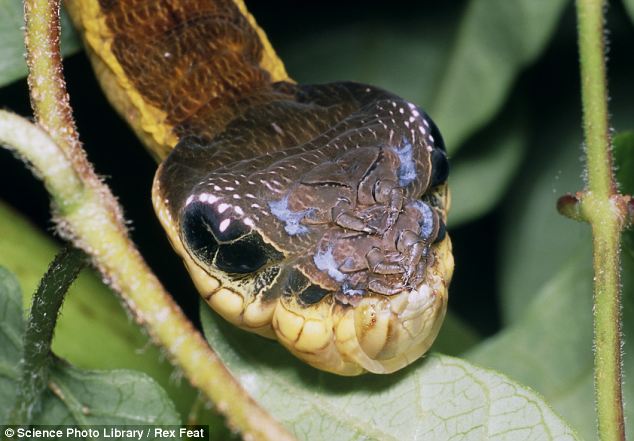
Snakerpillaphobia- the fear of caterpillars that disguise themselves as snakes.
 Yeah, I totally made that up, but who's with me, these guys are a little more than slightly creepy.  I mean look at them!  Go ahead, watch the video.


This video appears to be of the snake mimic hawkmoth caterpillar.  They are not really found in our part of the world, so if these guys are keeping you from a picnic, rest assured, you'll not likely find one here in the greater Portland area.  The picture below is identified as a snake mimic hawkmoth caterpillar over on Mail Online.


Now I do have to say, as a pest control professional, in my research of this creepy crawly, I found far creepier caterpillars that can do things like spray acid and hook poisonous barbed hairs into a person (or predatory creature).  

I know you won't be calling me for these guys, but if you're having issues with other pests give me a call. The typical summer pests include bees, spiders, fleas, wasps, yellow jackets, ants and rodents.  Plus bedbugs are still bugging people around Portland, Vancouver, and surrounding areas.  I'd be happy to help with any pest issue you might be dealing with.

Micah Wood
503-998-4322
360-607-1933


Friday, February 15, 2013

Bedbugs Live Where?!?! Fun Fact Friday

When you hear the term bedbug, if you assume that bedbugs infest and live in beds, you are like most people.  But guess what? Bedbug infestations reach further than the bed.  In having a conversation with a friend of the family, I came to the realization that people as a whole are very misinformed as far as where bedbugs live and what they can infest.

Something I've commonly heard- "Oh, if I get bedbugs, I will burn the bed!"

Guess what happens when you bring your brand new bed into the house?  The brand new bed gets infested and here's why: Bedbugs do not just infest beds.  Some places that bedbugs commonly infest:

  • Dressers
  • Bedside Tables
  • Head and Foot Boards
  • Wall Voids
  • Base Boards
  • Debris Near Beds (Laundry, Books, Toys, Garbage, etc)
  • Couches
  • Chairs
  • Etc
If bedbugs can/do infest all of these places, getting rid of an infested bed does no good at all.  Getting rid of a bed and buying a new one is often more costly than pest control measures to treat for bedbugs, and it is far less effective considering the fact that the new bed will become infested with bedbugs without proper pest control measures.

Something else I have commonly heard is people relating bedbugs to lice.  People's homes can be infested with bedbugs but a person does not have bedbugs infesting their person.  That does not mean that a person who's home is infested will not take bedbugs to other places, it is entirely possible and even likely to happen. Bedbugs can hitchhike on clothing, shoes, luggage, briefcases etc.  But a person will not have bedbugs crawling about on them throughout the day as they go about their business.

Additionally I have heard bedbugs being related only to poor housing or low quality hotels/motels.  While a bedbug problem can and sometimes does become bigger in these places because the cost of treatment can be a deterrent when finances are tight, bedbug infestations happen across the board.  Bedbugs are often brought home by people who travel for business. Doctors who may have patients bring them in to hospitals/offices can take bedbugs home. Any professional that is inside of peoples homes is at a greater risk for bringing bedbugs home.

In order to maintain better control of bedbugs, people need to be informed.  There is plenty of misinformation available on the web.  I recently read on a popular and well trusted site that bedbugs are no longer a problem in the United States.  This information is just not true.  There was a time when bedbugs were almost unheard of here, but they are on the rise in a serious way.

If you are having trouble with bedbugs, spiders, fleas, ants or other pests, give me a call.  I'd be happy to help you out.  Mention this pest control coupon and blog post when you call to schedule your (free) inspection for $50 off a full bedbug treatment by Peak Pest Management.


Micah Wood
Peak Pest Management LLC
Portland 503-998-4322
Vancouver 360-607-1933
Seattle 206-790-8285


Friday, November 16, 2012

Roaches Again | Fun Fact Friday | Pregnant for Life

First of all, I want to give you this little gem: There are cockroaches in Central and South America that are 6 inches long. 1/2 a foot.  I'll let that sink in for a moment before I move on to today's fun fact.  Not all cockroaches are pests, in nature they serve important roles (otherwise why would they exist? right?).

Okay, moving on to today's fun fact.  In some (I didn't check this for ALL) species of cockroaches, females mate once and then are pregnant for life.  That's right. Pregnant for life.  I can't pretend to understand this, but I know that my wife would not enjoy being pregnant for life.  It's not that they WHOLE process was miserable-- there were miserable moments to be sure.  It's just at the end of 9 months she was ready to be done.

Cockroaches don't get that (although let's be realistic, they also don't have all of the feelings and emotions that people do).  But nevertheless, they have some babies and then are STILL pregnant, with the next batch of cockroach babies.

Here is a video about the topic of cockroaches:


If you are experiencing a cockroach infestation, I understand that cockroaches are not a laughing matter.  Cockroaches and transfer a number of diseases that are harmful to people, by contaminating food sources.

These speedy pests can be really upsetting.  I am not just going to throw this information out there, if you are having a problem with cockroaches and would like some help, I'd be happy to help.  Peak Pest Management offers a wide range of pest control services for all of your pest control needs.  Cockroaches, mice, rats, fleas, ants, carpet beetles, and bedbugs are just a few pests that we see and help people get rid of all the time!

Give us a call, we'll help you out.

Micah Wood
Peak Pest Management
www.peak-pest-management.com
micah@peak-pest-management.com
Pest Control Portland- 503-998-4322
Pest Control Seattle-  206-790-8285
Pest Control Vancouver- 360-607-1933

Monday, October 22, 2012

Box Elder Beetles | Nuisance Pests

Sometimes in my profession I learn about trends in pest control on the job.  Sometimes a trend is obvious in my every day life aside from my profession like this weekend. We attended a birthday party at a family friend's home.  When we got there, I noticed a few box elder beetles around.  Then, the back door had 20 or so box elder beetles on it.  Because pest control is what I do, I asked about them.

Come to find out, at times during the day there are literally thousands of them that come and cover one side of the house almost entirely.  Our friend said "Yeah, they are a real nuisance!"  I hear this statement often.  Not only about box elders, but ants, spiders, mice, rats etc.  I think this is why there is a whole category of pests in pest control called "nuisance pests."

Box elder beetles outside, in warm months, often go unnoticed.  They don't cause problems for people outside and during the summer.  However, as the temperatures drop, box elder beetles often try to move indoors-- in homes and businesses to overwinter.  Typically they move in such large numbers that they can actually cause damage by staining things like curtains and walls etc. with their excrement.

Box elder beetles don't bite or cause structural damage.  It is often the fact that they collect in such large numbers that causes concern.  A huge mass of box elder bugs moving in to overwinter just in time for the holiday season in typically not the type of guest most people welcome!

Along the same line of trends in pests, I have also noticed it seems to be a big year/season for spiders. Spiders are a pest that I help people out with year round.  People often ask me to take care of spiders at the same time as other pests.  If I'm out for another pest whether it is ants, mice, rats, fleas etc, I will give a good discount for taking care of spiders at the same time.

Micah Wood
360-607-1933
503-998-4322
206-790-8285
micah@peak-pest-management.com
www.peak-pest-management.com

Monday, September 24, 2012

Rats, Bedbugs, Fleas, Bees | A Day in the Life

A Day in The Life of a Pest Control Technician

 
Any given day can hold endless possibilities of the various pests I'll run into on the job.  I'll tell you the truth, I like variety in my day.  If I didn't, this wouldn't be the job for me.  There is nothing mundane or boring about driving out in my pest control truck and saving the day.  Yes, that's right, saving the day.  Not in the same way as a super hero, or law enforcement, doctors, emergency workers and military, but still-- I do save the day.
 
On a relatively busy day I might go out on up to seven or eight calls. Sometimes in pest control I'll have a trend for the day-- like 3-4 of the same sort of job and maybe one or two other pests.  But other times my day is completely varied.  Because typically I might see four or five different pests on a busy day, I'll run through a list of pests that I see regularly.
 
  • Rats and mice are a common call. This is the call I most often take early in the morning and late at night. People do not like rodents! Understandably so, because rodents can carry a number of diseases as well as fleas. Rodents can really contaminate a home or business and people are often anxious for a solution when they see one.  Often I will fill my early morning time slots with rodent jobs.
  • Bees (well, really mostly wasps and yellow jackets but the call is often for "bees") are kind of a specialty.  Up until I said to a customer "I almost never get stung,"  it had been a really long time since I was last stung.  The day I said that I got stung 6 times.  I'm not really complaining, it's just a hazard of the job-- from time to time stings happen.  When I don't get stung, I can take care of a basic "bee" call pretty fast.  During the summer and early Autumn I can have 3-4 calls in one day-- all for bees and wasps.
  • Bedbugs are another call that can come in the middle of the night or early in the morning.  Bedbugs creep people out.  The thought of being bitten while you sleep can cause a person to lose more than a little sleep.  People who call in about bedbugs and end up having a flea infestation are some of the happiest and most relieved customers I have ever met.  Although the number of bedbug cases I see is on a steady rise, I do encounter many people who suspect bedbugs but are relieved to hear it is something else.  Although bedbugs and fleas are very different, both bite and I do see both bedbugs and fleas on a regular basis.
  • Fleas and pets go hand in hand.  It makes sense that customers with a flea infestation in the home are often concerned about the health and safety of their pet.  At Peak Pest Management, we are also concerned about the health and safety of the pets and people in the home.  We choose the safest and most effective products available.
  • Spiders are one of the pests that make me feel like I'm saving the day.  Spiders are a very real fear for many people and although we do have relatively few poisonous spiders here in the northwest, the ones we do have (namely hobo spiders) can be aggressive.  A happy customer is a customer who no longer has to worry about spiders invading their home.
  • Ants and termite calls come in on a regular basis as well.  Ants can be a nuisance, or they can be a structural pest depending on the type of ant.  Carpenter ants and termites (not an ant) are structural pests that cause real and expensive damage when left untreated.  People sometimes confuse carpenter ants, termites and even powder post beetles.  All three cause structural damage and it can be hard for a person to differentiate which pest is causing problems.  A Pest Control Professional, like myself, is trained to recognise the differences in these pests, not just by what they look like, but by other evidence that is left behind by structural pests.
Because I am just talking about "a Day in the Life," I won't go into detail about these pests or list out everything I have ever treated for-- or even everything I've done this week.  Honestly that would probably be pretty long and it would eventually get boring.  Maybe another day I'll write about my experiences with ridiculously smart squirrels and funny and unusual calls.  But for today, there's just a sampling of what I might do in a day-- at this time of year.
 
I'm here, any time, for all of your pest control needs.
 
Micah Wood
Peak Pest Management
503-998-4322
360-607-1933
206-790-8285

Friday, September 7, 2012

Fun Fact Friday | Fireflies | How And Why Do Fireflies Light Up?

Fireflies are interesting and intriguing to adults.  To children they seem down right magical.  So, is there a scientific reason that fireflies light up and glow?  According to a six year old I know it is a combination of faith, trust and pixie dust but that has more to do with Tinkerbell than science!

The chemical process that gives fireflies their glow is called bioluminescence. 
"When oxygen combines with calcium, adenosine triphosphate (ATP) and the chemical luciferin in the presence of luciferase, a bioluminescent enzyme, light is produced." (www.scientificamerican.com).
 
Basically when reading I found that the fireflies have a gene called LUC gene.  And the presence of a substance called Lucifrase in their cells.  These drive the chemical process, using oxygen and/or nitrous oxide, that produces light.

An interesting fact about fireflies is that the light they produce is "cold" light.  Their organs would not sustain the heat involved if fireflies produced "hot" light.

Here is a youtube video of a firefly caught by a spider.


And here is a video of fire flies in action.


Because it is fun fact Friday we're not focused on pests in our writing today!  But, as always I am available for pest control services for all kinds of pests including, spiders, ants, fleas, termites, cockroaches, mice, rats, bedbugs and more!  Give me a call if you need pest control service in  Portland, Vancouver or Seattle.

Micah Wood
Peak Pest Management
503-998-4322
360-607-1933
206-790-8285
www.peak-pest-management.com
micah@peak-pest-management.com


Branham, Mark: Ask The Experts "How and Why Do Fireflies Light Up?" Scientific American 5, September 2005 http://www.scientificamerican.com/article.cfm?id=how-and-why-do-fireflies

Environmental Science "How do fireflies light up?" How Stuff Works 1998-2012
http://science.howstuffworks.com/environmental/life/zoology/insects-arachnids/question554.htm

Genetic Science Learning Center. "What Makes a Firefly Glow?." Learn.Genetics7 September 2012 http://learn.genetics.utah.edu/content/begin/dna/firefly

Monday, July 23, 2012

Pets, Fleas, Flea Medication, Flea Free Home

In the spring and especially summer months pets tend to spend more time outdoors.  Being outdoors creates the possibility of bring in fleas.  Many pet lovers treat their furry family members for fleas and then experience an influx of fleas inside the home.  This is normal.  Because the flea medicine protects the pet from fleas, the fleas that would normally be on the pet are now in the house and occasionally jumping on and biting people.

Many people are embarrassed to call about fleas, thinking that people can "have fleas."  Fleas will not infest a person like they infest a pet, but they will bite and rapidly multiply in a home.  Flea eggs take a few days to hatch and are often in carpet, pet bedding etc. not just on the pets. Flea larva are blind remain hidden in dark areas while feeding on organic matter (including dead insects, plant matter and fecal matter).  After various stages as larva, fleas will move into a pupa stage and finally emerge as an adult flea.  It is only after a meal (of blood) that this parasitic insect is able to lay eggs.

Fleas are nothing to be embarrassed about.  Fleas are all over the place, and our enviroment during the spring and summer months is pretty much the perfect climate for fleas to thrive.  If you treat your furry family members for fleas and then start seeing larger numbers of fleas in the home, it might be a good time to call Peak Pest Management for an affordable, pet and kid safe flea treatment for the home.

Besides fleas, the warm summer months also tend to bring out the ants, bees, spiders, mice, rats, wasps and yellow jackets! If you're having pest problems this summer let me help you out! I'll get rid of your pests so you can enjoy the great weather while it's here!


Micah Wood
Peak Pest Management
503-998-4322
360-607-1933
www.Peak-Pest-Management.com
micah@peak-pest-management.com

Friday, July 13, 2012

Caterpillers, Moths and Jumping Beans | Fun Fact Friday

Have you ever seen a little novelty item box of jumping beans for sale and wondered what the trick is that gets them to jump around in that little box?  No trick needed.  Inside of the beans are actually the caterpillars of bean moths. 

So if your kids are begging for pets and you're just not ready to get them one, you could go with a pet bean.  You could even ease your way into jumping beans by starting with a regular old every day bean (provided that your children are either quite young--or old enough to laugh about it.)

That is all for Fun Fact Friday today!  Hope everyone has a fun, safe, pest free weekend.  If it isn't pest free and you'd like it to be-- give me a call!  Spiders, bees, ants, fleas, mice, wasps or any other pest control need-- give me a call!

Micah Wood
Peak Pest Management
360-607-1933
503-998-4322
www.peak-pest-management.com
micah@peak-pest-management.com

Friday, July 6, 2012

House Flies | Tasty Feet | Fun Fact Friday

House Flies are obnoxious!  Open the doors during summer to let in a breeze and you're almost certain to get one or two (or even more) flying through your house!  NOT FUN!  Okay but there is a fun fact about flies: 

Flies can "taste" with their feet.  Their feet are 10,000,000 times more sensitive to sugar than the human tongue.

Seriously!  I read this information at http://www.pestworldforkids.org/flies.html which is kept by the national pest management association and also cross checked it on the website of the Smithsonain Department of Systematic Biology.

So...  Now that you have the fun fact, you might be thinking, awesome.  Great!  So glad they can taste with their feet, Micah, now HOW DO I AVOID OR GET RID OF THEM?!?

Tips to Avoid Common House Flies:
  • Use mesh screens on windows and doors.
  • Take out the trash regularly.
  • Clean up pet messes immediately (as these are a major breeding ground for flies).
  • Keep a clean home.
Tips to Get Rid of House Flies:
  • Follow the "tips to avoid."
  • Find, clean and sanitize areas where flies are known to be.
  • Eliminate food sources for flies, which is anything warm and damp.  Disgusting as it is, flies are particularly drawn to pet waste because of the strong odor.
  • For common house flies in homes, rarely is it necessary to use professional pest control, unless it is an extreme infestation.
For any pest control questions or for pest control service for flies, or other pests (common summer pests include ants, bees, wasps, fleas, yellow jackets, hornets, mice and rats) please give me a call!

Micah Wood
Peak Pest Management
503-998-4322
360-607-1933
www.Peak-Pest-Management.com
micah@peak-pest-management.com


Wednesday, June 27, 2012

Yellow Jackets, Bees, Wasps, Hornets | Summer's Least Favorite Pests

Stinging pests are some of the most common pests that bother people during the summer.  Part of this is because people are outside more often in sunny (and partially cloudy but not torrential downpours) weather. Another part of this is that bees, wasps, yellow jackets and hornets tend to die off and/or overwinter and emerge again in spring and summer.

Bees and Wasps alike play important roles in their natural environment.  Bees help to pollinate plants and wasps help to keep down other insect population numbers.  They are, none the less, a pest when they enter into our living space.  Wasps and bees alike can sting and/or bite-- making them a pest that is most feared by children (and adults alike).

Often the behaviors of people who are afraid of these stinging pests encourage a sting.  Some good ways to avoid being stung include:

  • Avoid slapping at bees, wasps, yellow jackets and hornets.
  • Avoid flailing your arms trying to keep the stinging insect away, this actually encourages a sting.
  • Avoid sitting at picnic tables that are right next to garbage cans where yellow jackets and other wasps tend to scavenge for foods-- especially if you are afraid of stinging pests and prone to slapping at them.
  • Generally leave the bees and wasps alone and stay away from their nests.
  • If there is a bee or wasp nest in or around your home call Peak Pest Management to help you out!
(If you have a bee allergy or suspect you have a bee allergy this advice does not replace any that the doctor has given, it is simply a list of suggestions based on observation.)

For bees, wasps, yellow jackets, hornets and other common summer pests (like ants, spiders, box elder beetles, fleas, flies and more) please give Peak Pest Management a call or email!  We will help you get rid of or prevent pest problems!

Micah Wood
Peak Pest Management
503-998-4322
360-607-1933

Thursday, June 21, 2012

Mice | Little Bunny Foo Foo Hopping Through The Forest

Recently my wife was singing a song in the car with our kids that she says her mom sang with her...  It goes a little something like this,
Little Bunny Foo Foo hopping through the forest, scooping up the field mice and bopping them on the heads,Along came the good fairy and she said "Little Bunny Foo Foo, I don't want to see you scooping up the field mice and bopping them on the heads.  I'll give you three chances and then POOF, you're a goon!"
Anyways, I was totally relating with the bunny right?  Mice are pesky, they get into stuff, they eat your food and rip up your papers and ruin clothing and generally make a mess of things.  Also worth noting, what on Earth is a GOON? (To be fair, I did look it up.  It is defined as a stupid person, a person hired to take out enemies, or a low level gang member. I think it's safe to say that the definition of "goon" has probably changed.).

All that is to say, the song got me thinking about mice...  And since I was thinking about mice, I decided to blog about mice... Again.  Mice are a common pest control call all year, with a slightly lower amount in the summer.  Mice are a pest year round because they are attracted to food, water and nesting materials that are readily available where people are.

While there are a number of ways to treat for mice, I have found that the bunny's method (scooping up and bopping) in the song would be completely ineffective...  It would also be rather difficult since mice can be quick, squeeze into the teensiest tinesiest cracks and disappear just about as quickly as you can scream and jump onto a chair! Not that this is what I do when I see a mouse-- I have seen it happen though.

Such a small creature can create panic, make a huge mess, damage duct work and insulation, and cause a major problem with sanitation.  Mice are dirty, can carry fleas and diseases.  They can contaminate food supplies and destroy papers and clothing.  It is important to treat for mice.  There are a number of methods for controlling mice.  The integrated pest control approach takes into consideration the environment and other animals.  Pest control for mice has come a long way as far as baits are concerned.  While once mouse bait could make a cat, dog or child sick-- the newer products are specifically targeted for mice and their specific biological make up.  While it is still important to keep baits out of reach of children and pets, pest control has gotten safer.

If you're seeing mice around your house, inside, in the garage or in the crawl space, it is a good idea to have an inspection to talk about whether or not there is damage and the extent of it, exclusion work (closing off areas mice, rats or other animals can get in), and how to best treat or prevent an infestation.

Micah Wood
Peak-Pest-Management.com
Micah@peak-pest-management.com
503-998-4322
360-607-1933
Text 503-369-4623