You know when something is called Goliath it is going to be big. Well, when it is the Goliath Bird-Eating Spider, this translates to dinner plate sized. Not dessert, not salad, nope full on dinner plate sized folks. That is one monstrous spider.
Although research shows they rarely eat birds and mainly focus on insects, these spiders are capable of making a meal of rodents, frogs, lizards, bats, birds and even some snakes. The Goliath Bird-Eating spider will not seek to attack a human, although they will bite and/or throw nasty barbed hairs. I hear the bite is similar in affect to a wasp sting. The hairs cause an itchy rash on the skin and can damage eyes and mucous membranes.
With inch long (give or take) fangs these spiders make a formidable foe and despite being nearly blind they're pretty good on the defense too. Check out this youtube video by National Geographic.
From a pest control stand point, these guys aren't an issue. In fact some people choose to keep these and other tarantulas as pets. The Goliath Bird-Eater is native to northern South America, so we North Americans should not run across one of these guys in the wild. Pet stores? Maybe. Backyards? Unlikely- unless your neighbor had a pet and turned it loose in your yard!
If you're dealing with pest spiders as unwelcome guests in your home, give me a call and I'll be happy to help you out. In fact we, at Peak Pest Management, are running a summer special. $99 for inside or outside spider treatment. Same deal with ants. Bees, wasps and yellow jackets are also typical summer pests. We'll remove a nest for $99 or you can get a full treatment with a guarantee and not have to worry about these stinging pests in your yard!
Micah Wood
Peak Pest Management LLC
www.peak-pest-management.com
503-998-4322
360-607-1933
Peak Pest Control Portland

Showing posts with label Ants. Show all posts
Showing posts with label Ants. Show all posts
Monday, July 15, 2013

Tuesday, June 25, 2013
Mosquito Eaters- The Truth Is Out

Mosquito Eaters: The Truth is Out. They Do NOT Eat Mosquitoes.
Mosquito Eater, Mosquito Hawk, Crane Fly, Giant Mosquito... Did you grow up calling them mosquito eaters? I did. And it wasn't until I began learning more about pests and pest control that I found out the truth... They do not eat mosquitoes. In fact, the larva, often called leather backs, can be a pest that chomps down on the roots of plants. Have you ever noticed brown patches in the lawn? It could be caused by crane fly larva destroying the root system of the lawn.
Do Crane Flies Bite?
No. Crane flies, unlike their tiny look-alike, do not bite. They really don't do much of anything. They don't live very long, they don't eat your yard or other plants, they just mate, deposit eggs and die. The depositing of eggs is the problematic part. Because as the eggs hatch into larva and the larva begins to eat, the root systems of your lawn could be at risk.Are Crane Flies Helpful?
Crane flies are not actually helpful as far as eating other pests etc. Crane flies do not eat mosquitoes, they do not kill mosquitoes, they don't eat or kill any other bug. So all those years of people telling you, leave that mosquito eater alone, he is going to eat mosquitoes. Yeah, not true. You could have killed those suckers and it wouldn't have made one bit of difference as far as mosquitoes are concerned.Are Crane Flies Going to Hurt Me?
Well. They are a nuisance pest if they flock indoors. To keep crane flies out, keep screens in good repair, and keep the screen doors shut. If they come in, they are not going to hurt you. They won't bite you. They may flap and flutter around in your face and annoy you, but they won't hurt you.
Pest Control Issues?
Are you dealing with a pest? I'm not just talking about crane flies at this point. Ants, Bees, Fleas, Spiders, Mice, Rats, Bedbugs, Carpenter Ants, Termites, Flies, Wasps, Yellow Jackets, Hornets? For all of your pest control needs, Peak Pest Management offers the affordable local option.Micah Wood
Peak Pest Management LLC
503-998-4322
360-607-1933
Tuesday, June 4, 2013
Caterpillars That Look Like Snakes! Need a New Phobia?
Snakerpillaphobia- the fear of caterpillars that disguise themselves as snakes.Yeah, I totally made that up, but who's with me, these guys are a little more than slightly creepy. I mean look at them! Go ahead, watch the video.
This video appears to be of the snake mimic hawkmoth caterpillar. They are not really found in our part of the world, so if these guys are keeping you from a picnic, rest assured, you'll not likely find one here in the greater Portland area. The picture below is identified as a snake mimic hawkmoth caterpillar over on Mail Online.
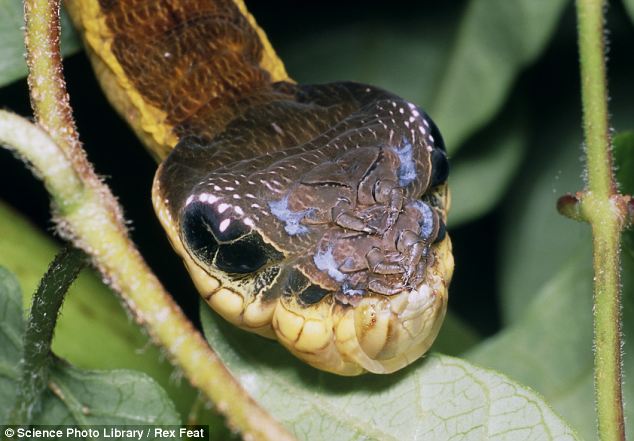
Now I do have to say, as a pest control professional, in my research of this creepy crawly, I found far creepier caterpillars that can do things like spray acid and hook poisonous barbed hairs into a person (or predatory creature).
I know you won't be calling me for these guys, but if you're having issues with other pests give me a call. The typical summer pests include bees, spiders, fleas, wasps, yellow jackets, ants and rodents. Plus bedbugs are still bugging people around Portland, Vancouver, and surrounding areas. I'd be happy to help with any pest issue you might be dealing with.
Micah Wood
503-998-4322
360-607-1933
Tuesday, May 7, 2013
Zombies, Mind Control, Zombification Antidote-- On a Pest Control Blog?
Zombies are walking the Earth as we speak. Their minds are overtaken and they are driven for the purpose of creating more zombies. Sounds like science fiction, but it is just plain science and it's a fact. The Zombie Antpocolypse is upon us. And nope, that wasn't a typo. I'm not talking about human zombies, I'm talking about ants... Of course!
You may remember that I've written about this before, but it just so happens that I came across an article (to read it, click here) of hope for Zombie Ants. Okay, well the truth is there isn't hope for those already overtaken-- but there is hope for their colony.
If you read my previous post about Zombie Ants, you may remember that the zombification process is started by a parasitic fungus that takes over the ants brain causing strange and unexpected behaviors. Scientists believe this is caused by the release of neurotoxin that disrupts normal ant behaviors. Ants that typically march in rows will stumble, walk circles and then at around noon, clamp their mandible on a leaf stem or branch, where they will hang (and die) until the fungi sprout out of the ants head and release more spores into the soil below for unsuspecting ants marching by.
It appears that there is an antidote. It is a parasite to the parasite that works to neutralize the fungus before it can release spores to infect more ants. The parasite to the fungus is a secondary fungus that effectively coats the first fungus, preventing it from releasing spores to infect more ants.
For your viewing pleasure, we have created pictures of what really happens vs well, you know-- what you imagine the Zombie Antpocolypse to be like (please excuse the missing "e" in the second picture... apparently it has fallen victim to the zombies!!!)... And then finally, a video made by the BBC on Zombie Ants.


Friday, February 15, 2013
Bedbugs Live Where?!?! Fun Fact Friday

Something I've commonly heard- "Oh, if I get bedbugs, I will burn the bed!"
Guess what happens when you bring your brand new bed into the house? The brand new bed gets infested and here's why: Bedbugs do not just infest beds. Some places that bedbugs commonly infest:
- Dressers
- Bedside Tables
- Head and Foot Boards
- Wall Voids
- Base Boards
- Debris Near Beds (Laundry, Books, Toys, Garbage, etc)
- Couches
- Chairs
- Etc
If bedbugs can/do infest all of these places, getting rid of an infested bed does no good at all. Getting rid of a bed and buying a new one is often more costly than pest control measures to treat for bedbugs, and it is far less effective considering the fact that the new bed will become infested with bedbugs without proper pest control measures.
Something else I have commonly heard is people relating bedbugs to lice. People's homes can be infested with bedbugs but a person does not have bedbugs infesting their person. That does not mean that a person who's home is infested will not take bedbugs to other places, it is entirely possible and even likely to happen. Bedbugs can hitchhike on clothing, shoes, luggage, briefcases etc. But a person will not have bedbugs crawling about on them throughout the day as they go about their business.
Additionally I have heard bedbugs being related only to poor housing or low quality hotels/motels. While a bedbug problem can and sometimes does become bigger in these places because the cost of treatment can be a deterrent when finances are tight, bedbug infestations happen across the board. Bedbugs are often brought home by people who travel for business. Doctors who may have patients bring them in to hospitals/offices can take bedbugs home. Any professional that is inside of peoples homes is at a greater risk for bringing bedbugs home.
In order to maintain better control of bedbugs, people need to be informed. There is plenty of misinformation available on the web. I recently read on a popular and well trusted site that bedbugs are no longer a problem in the United States. This information is just not true. There was a time when bedbugs were almost unheard of here, but they are on the rise in a serious way.
If you are having trouble with bedbugs, spiders, fleas, ants or other pests, give me a call. I'd be happy to help you out. Mention this pest control coupon and blog post when you call to schedule your (free) inspection for $50 off a full bedbug treatment by Peak Pest Management.

Micah Wood
Peak Pest Management LLC
Portland 503-998-4322
Vancouver 360-607-1933
Seattle 206-790-8285
Friday, February 1, 2013
Ants | Largest and Smallest | Fun Fact Friday
Tomorrow we'll see if the groundhog sees his shadow. Then, we'll know whether we're in for more winter weather or mild spring like rain! Or something like that anyways. The number of people calling about ants is on the increase as we get closer to Spring.
Here is a video by National Geographic on fire ants in the south.
If you're having a problem with ants, give us at Peak Pest Management a call. We'll be happy to help you out!
Micah Wood
Peak Pest Management LLC
www.peak-pest-management.com
micah@peak-pest-management.com
Portland 503-998-4322
Vancouver 360-607-1933
Seattle 206-790-8285
Because ants are known as Spring pest because the rains of Spring (also Summer, Autumn and Winter too here in the northwest) can drive some species of ants indoors. Other species of ants come inside for reasons outside of the weather. But considering it's Fun Fact Friday, we're not going to get into the details of why ants come indoors. We're going to talk about two specific ants. The very largest species of ant and the very smallest species of ant (according the the Encyclopedia Smithsonian).
The smallest known species of ant is the Sri Lankan Ant. It is 1/30 of one inch in length.
The largest known species of ant is the Driver Ant of Africa. The worker reaches the length of 1 and 1/3 inches.
So unless you're travelling to Sri Lanka and Africa, you won't see the largest or the smallest species of ants. You get the average every day American varieties including carpenter ants, ghost ants (pretty tiny), odorous house ants, sugar ants, picnic ants, etc.
Here is a video by National Geographic on fire ants in the south.
If you're having a problem with ants, give us at Peak Pest Management a call. We'll be happy to help you out!
Micah Wood
Peak Pest Management LLC
www.peak-pest-management.com
micah@peak-pest-management.com
Portland 503-998-4322
Vancouver 360-607-1933
Seattle 206-790-8285
Friday, January 25, 2013
Carpet Beetles | Eating Habits | Fun Fact Friday
Carpet beetles are an interesting little pest. They have a larval stage and an adult stage. In their adult stage, they are a small beetle, as larva, they are more worm like. The larva cause the most damage, and by the time you find adult beetles, the damage has already been done.
So what do carpet beetles eat? Well, they eat organic matter and animal products, including skins, furs, hair, yarn, materials etc. They will also consume cotton and wool/synthetic blends. What does this mean? Well, they won't just gobble organic matter from your carpets, as the name might suggest. If they find a nice wool sweater or even a wool blend, these bad boys are going to gobble holes in that.
They will eat away at your sheepskin rug. They will gnaw on your cotton t-shirts, socks and clothing. They will happily munch holes in your wool winter socks, they will gobble holes right through your natural fabric stash. They will also happily munch on pet hair and debris that are often readily available in carpets.
Because of the damage they cause, you'll want to get rid of these guys if you find them in your home gnawing holes in your best wool slacks (or you know-- whatever your find them eating).
There are several different species of carpet beetle: some are black and some are brown. They are all grouped together in the same category as pests though, because they act, and can be treated for, in the same way.
Many people find holes in clothing and they assume that the problem is moths. Often, it is not moths, in cities, it is more likely that you are going to find a carpet beetle infestation.
If you are having trouble with carpet beetles, bed bugs, ants, mice or other pests, give us a call, we'll help you out.
Micah Wood
Peak Pest Management LLC
www.peak-pest-management.com
micah@peak-pest-management.com
Portland 503-998-4322
Vancouver 360-607-1933
Seattle 206-790-8285
Friday, January 18, 2013
Ants| You Are What You Eat| Fun Fact Friday
Ants are an interesting pest. Are they unpleasant in a home? Of course they are! They're creepy-crawly-tickly-itchy-stinky creatures, and depending on species, they can cause structural damage. I still think it's a good idea to take care of an ant infestation, even though I find them interesting.
Something I recently read at http://www.biokids.umich.edu was about how ants position in the colony is determined by how much and what they are fed in their infant stages. Food source and amount determines not only the size of an ant but the caste within the society. So a queen ant, or the workers (depending on the age of the colony) will feed the various larva different foods and in different amounts to raise more workers, soldiers, males, queens, etc depending on the needs of the colony.
Within an ant colony, there are many different types of ants. All of the ants are (generally speaking)the same species, but they look different, their purpose to the colony can be determined based on what they look like. An ant with a larger head and jaw is likely a protector/soldier of the nest and may also be a forager. Smaller ants are likely to be in-nest workers, digging and caring for the young. Ants with wings are reproductive, the smaller winged ants are general male and the larger are female. Before reading about it, I didn't realize that this position is determined as they develop, and is based on quantity and type of food.
Here is a fire ant video by national geographic. Not exactly on theme, but about ants and pretty interesting.
If you're having a problem with ants, whether they are moisture ants, odorous house ants, carpenter ants, big ants, small ants, or any other pest give us, at Peak Pest Management a call, send us an email or check out our website for more information!
Micah Wood
www.peak-pest-management.com
micah@peak-pest-management.com
Portland 503-998-4322
Vancouver 360-607-1933
Seattle 206-790-8285
Biokids: University of Michigan (2002-2013). Ants, Formicidae. http://www.biokids.umich.edu/critters/Formicidae/
Friday, December 7, 2012
Grasshoppers and Crickets: Fun Fact Friday
For fun fact Friday today, we have grasshoppers and crickets! While I don't get called out to treat for these bugs here in Portland, OR or Vancouver, WA. I still think they are interesting. One reason (which happens to be our fun fact for the day)? Some grasshoppers, katydids and crickets actually have ears on their front legs. The ears are located in the knee joints. If people were crickets I bet they'd be really careful about what they whispered into an ear. A knee-jerk reaction would really hurt!
Crickets, grasshoppers, katydids and locusts can really be a problem in some places though. Here's a video about katydids, called Mormon Crickets, in Colorado, done by National Geographic.
While I don't deal with these bugs, there are plenty that I do take care of. If you are having pest problems in Vancouver, WA, Portland, OR, Seattle, WA and the surrounding area, please give me a call! I'd be happy to help you out. Bedbugs, mice, rats, spiders, ants, whatever the pest, we'll develop a custom pest control plan for you.
Micah Wood
Peak Pest Management LLC
www.peak-pest-management.com
micah@peak-pest-management.com
Portland 503-998-4322
Vancouver 360-607-1933
Seattle 206-790-8285
Friday, November 9, 2012
Pheromone Trails | Pest Control | Fun Fact Friday
Have you ever wondered why ants march in a line? How bees remember which hive belongs to them? How wasps know to swarm when someone or something has been stung? Why rodents and other pests need to be treated regularly and a "one-time" treatment won't be effective? How animals and insects find mates?
The answer (or at least part of the answer) to these questions is pharomones. By origin, pheromone can be translated to mean to bear (or transport) hormones. Pharomones are used by many insects and animals including many social pests, including ants, rats, mice, bees, termites as well as many other pests.
Pharomones can be used to mark a trail to food. With ants it is particularly noticable because they literally march in lines from their nest to a food source. The trail that the line follows is marked with pheromones. Rodents such as mice and rats will also leave pharomone trails from the nesting area to the food source.
Another use for pharomones is alarm. Bees and wasps make the alarm pharomone easy to recognize. When one bee or wasp stings a potential threat, they also release pharomones to attract other bees and wasps to join them in the attack. This is especially true if a sting happens near a nest.
Furthermore pharomones are used by many insects and animals to attract a mate. If you've ever wondered why there is an icky swarm of mating bugs, the answer is pharomones. They are attracted together by pharomones.
Pharomones have other functions that I am not including in this post, but I just wanted to detail why pharomones are important and give some "fun" facts about them. If you have ever heard a pest control professional refer to pharomones or pharomone trails and wondered what on earth they were talking about-- here is a pretty good basic idea of the function of pharomones.
This video has a very visual way of showing how ants communicate using pheromones.
For all of your pest control needs, Peak Pest Management has a solution! If you're having issues with pests please give me, Micah, a call.
Micah Wood
www.peak-pest-management.com
micah@peak-pest-management.com
Pest Control Portland 503-998-4322
Pest Control Vancouver 360-607-1933
Pest Control Seattle 206-790-8285
We have similar information on our website blog. Click here to check it out.
Monday, October 22, 2012
Box Elder Beetles | Nuisance Pests
Sometimes in my profession I learn about trends in pest control on the job. Sometimes a trend is obvious in my every day life aside from my profession like this weekend. We attended a birthday party at a family friend's home. When we got there, I noticed a few box elder beetles around. Then, the back door had 20 or so box elder beetles on it. Because pest control is what I do, I asked about them.
Come to find out, at times during the day there are literally thousands of them that come and cover one side of the house almost entirely. Our friend said "Yeah, they are a real nuisance!" I hear this statement often. Not only about box elders, but ants, spiders, mice, rats etc. I think this is why there is a whole category of pests in pest control called "nuisance pests."
Box elder beetles outside, in warm months, often go unnoticed. They don't cause problems for people outside and during the summer. However, as the temperatures drop, box elder beetles often try to move indoors-- in homes and businesses to overwinter. Typically they move in such large numbers that they can actually cause damage by staining things like curtains and walls etc. with their excrement.
Box elder beetles don't bite or cause structural damage. It is often the fact that they collect in such large numbers that causes concern. A huge mass of box elder bugs moving in to overwinter just in time for the holiday season in typically not the type of guest most people welcome!
Along the same line of trends in pests, I have also noticed it seems to be a big year/season for spiders. Spiders are a pest that I help people out with year round. People often ask me to take care of spiders at the same time as other pests. If I'm out for another pest whether it is ants, mice, rats, fleas etc, I will give a good discount for taking care of spiders at the same time.
Micah Wood
360-607-1933
503-998-4322
206-790-8285
micah@peak-pest-management.com
www.peak-pest-management.com
Monday, September 24, 2012
Rats, Bedbugs, Fleas, Bees | A Day in the Life
A Day in The Life of a Pest Control Technician
Any given day can hold endless possibilities of the various pests I'll run into on the job. I'll tell you the truth, I like variety in my day. If I didn't, this wouldn't be the job for me. There is nothing mundane or boring about driving out in my pest control truck and saving the day. Yes, that's right, saving the day. Not in the same way as a super hero, or law enforcement, doctors, emergency workers and military, but still-- I do save the day.
On a relatively busy day I might go out on up to seven or eight calls. Sometimes in pest control I'll have a trend for the day-- like 3-4 of the same sort of job and maybe one or two other pests. But other times my day is completely varied. Because typically I might see four or five different pests on a busy day, I'll run through a list of pests that I see regularly.
- Rats and mice are a common call. This is the call I most often take early in the morning and late at night. People do not like rodents! Understandably so, because rodents can carry a number of diseases as well as fleas. Rodents can really contaminate a home or business and people are often anxious for a solution when they see one. Often I will fill my early morning time slots with rodent jobs.
- Bees (well, really mostly wasps and yellow jackets but the call is often for "bees") are kind of a specialty. Up until I said to a customer "I almost never get stung," it had been a really long time since I was last stung. The day I said that I got stung 6 times. I'm not really complaining, it's just a hazard of the job-- from time to time stings happen. When I don't get stung, I can take care of a basic "bee" call pretty fast. During the summer and early Autumn I can have 3-4 calls in one day-- all for bees and wasps.
- Bedbugs are another call that can come in the middle of the night or early in the morning. Bedbugs creep people out. The thought of being bitten while you sleep can cause a person to lose more than a little sleep. People who call in about bedbugs and end up having a flea infestation are some of the happiest and most relieved customers I have ever met. Although the number of bedbug cases I see is on a steady rise, I do encounter many people who suspect bedbugs but are relieved to hear it is something else. Although bedbugs and fleas are very different, both bite and I do see both bedbugs and fleas on a regular basis.
- Fleas and pets go hand in hand. It makes sense that customers with a flea infestation in the home are often concerned about the health and safety of their pet. At Peak Pest Management, we are also concerned about the health and safety of the pets and people in the home. We choose the safest and most effective products available.
- Spiders are one of the pests that make me feel like I'm saving the day. Spiders are a very real fear for many people and although we do have relatively few poisonous spiders here in the northwest, the ones we do have (namely hobo spiders) can be aggressive. A happy customer is a customer who no longer has to worry about spiders invading their home.
- Ants and termite calls come in on a regular basis as well. Ants can be a nuisance, or they can be a structural pest depending on the type of ant. Carpenter ants and termites (not an ant) are structural pests that cause real and expensive damage when left untreated. People sometimes confuse carpenter ants, termites and even powder post beetles. All three cause structural damage and it can be hard for a person to differentiate which pest is causing problems. A Pest Control Professional, like myself, is trained to recognise the differences in these pests, not just by what they look like, but by other evidence that is left behind by structural pests.
Because I am just talking about "a Day in the Life," I won't go into detail about these pests or list out everything I have ever treated for-- or even everything I've done this week. Honestly that would probably be pretty long and it would eventually get boring. Maybe another day I'll write about my experiences with ridiculously smart squirrels and funny and unusual calls. But for today, there's just a sampling of what I might do in a day-- at this time of year.
I'm here, any time, for all of your pest control needs.
Micah Wood
Peak Pest Management
503-998-4322
360-607-1933
206-790-8285
Friday, September 7, 2012
Fun Fact Friday | Fireflies | How And Why Do Fireflies Light Up?
Fireflies are interesting and intriguing to adults. To children they seem down right magical. So, is there a scientific reason that fireflies light up and glow? According to a six year old I know it is a combination of faith, trust and pixie dust but that has more to do with Tinkerbell than science!
The chemical process that gives fireflies their glow is called bioluminescence.
An interesting fact about fireflies is that the light they produce is "cold" light. Their organs would not sustain the heat involved if fireflies produced "hot" light.
Here is a youtube video of a firefly caught by a spider.
And here is a video of fire flies in action.
Because it is fun fact Friday we're not focused on pests in our writing today! But, as always I am available for pest control services for all kinds of pests including, spiders, ants, fleas, termites, cockroaches, mice, rats, bedbugs and more! Give me a call if you need pest control service in Portland, Vancouver or Seattle.
Micah Wood
Peak Pest Management
503-998-4322
360-607-1933
206-790-8285
www.peak-pest-management.com
micah@peak-pest-management.com
Branham, Mark: Ask The Experts "How and Why Do Fireflies Light Up?" Scientific American 5, September 2005 http://www.scientificamerican.com/article.cfm?id=how-and-why-do-fireflies
Environmental Science "How do fireflies light up?" How Stuff Works 1998-2012
http://science.howstuffworks.com/environmental/life/zoology/insects-arachnids/question554.htm
Genetic Science Learning Center. "What Makes a Firefly Glow?." Learn.Genetics7 September 2012 http://learn.genetics.utah.edu/content/begin/dna/firefly
The chemical process that gives fireflies their glow is called bioluminescence.
"When oxygen combines with calcium, adenosine triphosphate (ATP) and the chemical luciferin in the presence of luciferase, a bioluminescent enzyme, light is produced." (www.scientificamerican.com).Basically when reading I found that the fireflies have a gene called LUC gene. And the presence of a substance called Lucifrase in their cells. These drive the chemical process, using oxygen and/or nitrous oxide, that produces light.
An interesting fact about fireflies is that the light they produce is "cold" light. Their organs would not sustain the heat involved if fireflies produced "hot" light.
Here is a youtube video of a firefly caught by a spider.
And here is a video of fire flies in action.
Because it is fun fact Friday we're not focused on pests in our writing today! But, as always I am available for pest control services for all kinds of pests including, spiders, ants, fleas, termites, cockroaches, mice, rats, bedbugs and more! Give me a call if you need pest control service in Portland, Vancouver or Seattle.
Micah Wood
Peak Pest Management
503-998-4322
360-607-1933
206-790-8285
www.peak-pest-management.com
micah@peak-pest-management.com
Branham, Mark: Ask The Experts "How and Why Do Fireflies Light Up?" Scientific American 5, September 2005 http://www.scientificamerican.com/article.cfm?id=how-and-why-do-fireflies
Environmental Science "How do fireflies light up?" How Stuff Works 1998-2012
http://science.howstuffworks.com/environmental/life/zoology/insects-arachnids/question554.htm
Genetic Science Learning Center. "What Makes a Firefly Glow?." Learn.Genetics7 September 2012 http://learn.genetics.utah.edu/content/begin/dna/firefly
Friday, August 24, 2012
Termites | Bugs People Eat | Fun Fact Friday
Around the world there are bugs that "eat" people. Mosquitoes, bed bugs, ants (yes really), etc. But what might be less well know is that around the world, people eat bugs- sometimes as a dietary staple. Here in the United States, it is less common, although people do eat bugs as a joke, on a dare, or by accident-- generally speaking though, bugs are not a common ingredient in our food (yet).
Merriam-Webster online dictionary defines Entomophagy:
Micah Wood
Peak Pest Management LLC
503-998-4322
360-607-1933
206-790-8285
www.peak-pest-management.com
micah@peak-pest-management.com
Merriam Webster Online Dictionary: "Entomophagy" www.merriam-webster.com
Merriam-Webster online dictionary defines Entomophagy:
Entomophagy : the practice of eating insectsBecause bugs are very nutritious and take very little effort or resources to raise, the practice of eating insects (or entomophagy) is being encouraged amoung young people and environmentally concious people. Here are some commonly eaten bugs:
- Grasshoppers
- Cicadas
- Ants
- Termites
- Aquatic Insect Larva
- Wax worms
- Dragonflies
- Wasp Larvae
- Moth Pupa
- Palm Weevil Larva
- Cirina forda Westwood larva
- Damsel Flies
- Crickets
- Compost Beetle Larva
Micah Wood
Peak Pest Management LLC
503-998-4322
360-607-1933
206-790-8285
www.peak-pest-management.com
micah@peak-pest-management.com
Merriam Webster Online Dictionary: "Entomophagy" www.merriam-webster.com
Mott, Maryann. "Bugs as Food: People Bite Back." National Geographic News. 16 Apr. 2004. http://news.nationalgeographic.com/news/2004/04/0416_040416_eatingcicadas.html.
Unger, Lana. "Bug Food: Edible Insects - Insect Snacks from Around the World." The University of Kentucky College of Agriculture. 26 Jan 2009. http://www.ca.uky.edu/entomology/dept/bugfood2.asp
Unger, Lana. "Bug Food: Edible Insects - Insect Snacks from Around the World." The University of Kentucky College of Agriculture. 26 Jan 2009. http://www.ca.uky.edu/entomology/dept/bugfood2.asp
Friday, August 17, 2012
High Flying Bugs : Fun Fact Friday
For fun fact Friday I'm straying away from pests like ants, bees, spiders, wasps etc. To bring you a fact about one of the most beautiful insects. The butterfly! Here it is: Some butterflies have been observed flying as high as 20,000 feet altitude.
Here is a youtube video on mutant butterflies from near Fukushima. Scientists believe that when insects are strongly affected by radiation, humans will be even more affected. Insects are highly resistant to the effects of radiation.
If you are having trouble with pests like mice, rats, ants, bees, fleas, wasps, termites or other pests and need pest control service in Portland, OR, Vancouver, WA or Seattle, WA. Please give me a call!
Micah Wood
Peak Pest Management LLC
503-998-4322
360-607-1933
206-790-8285
www.peak-pest-management.com
micah@peak-pest-management.com
Encyclopedia Smithsonian: Most Incredible Insects www.si.edu
Monday, July 23, 2012
Pets, Fleas, Flea Medication, Flea Free Home
In the spring and especially summer months pets tend to spend more time outdoors. Being outdoors creates the possibility of bring in fleas. Many pet lovers treat their furry family members for fleas and then experience an influx of fleas inside the home. This is normal. Because the flea medicine protects the pet from fleas, the fleas that would normally be on the pet are now in the house and occasionally jumping on and biting people.
Many people are embarrassed to call about fleas, thinking that people can "have fleas." Fleas will not infest a person like they infest a pet, but they will bite and rapidly multiply in a home. Flea eggs take a few days to hatch and are often in carpet, pet bedding etc. not just on the pets. Flea larva are blind remain hidden in dark areas while feeding on organic matter (including dead insects, plant matter and fecal matter). After various stages as larva, fleas will move into a pupa stage and finally emerge as an adult flea. It is only after a meal (of blood) that this parasitic insect is able to lay eggs.
Fleas are nothing to be embarrassed about. Fleas are all over the place, and our enviroment during the spring and summer months is pretty much the perfect climate for fleas to thrive. If you treat your furry family members for fleas and then start seeing larger numbers of fleas in the home, it might be a good time to call Peak Pest Management for an affordable, pet and kid safe flea treatment for the home.
Besides fleas, the warm summer months also tend to bring out the ants, bees, spiders, mice, rats, wasps and yellow jackets! If you're having pest problems this summer let me help you out! I'll get rid of your pests so you can enjoy the great weather while it's here!
Micah Wood
Peak Pest Management
503-998-4322
360-607-1933
www.Peak-Pest-Management.com
micah@peak-pest-management.com
Friday, July 13, 2012
Caterpillers, Moths and Jumping Beans | Fun Fact Friday
Have you ever seen a little novelty item box of jumping beans for sale and wondered what the trick is that gets them to jump around in that little box? No trick needed. Inside of the beans are actually the caterpillars of bean moths.
So if your kids are begging for pets and you're just not ready to get them one, you could go with a pet bean. You could even ease your way into jumping beans by starting with a regular old every day bean (provided that your children are either quite young--or old enough to laugh about it.)
That is all for Fun Fact Friday today! Hope everyone has a fun, safe, pest free weekend. If it isn't pest free and you'd like it to be-- give me a call! Spiders, bees, ants, fleas, mice, wasps or any other pest control need-- give me a call!
Micah Wood
Peak Pest Management
360-607-1933
503-998-4322
www.peak-pest-management.com
micah@peak-pest-management.com
Tuesday, July 10, 2012
Pest Control | Fruit Flies | It Was Once Widely Believed That They Spontaneously
Fruit flies are a very common kitchen pest. Fruit flies are probably more common than ants, spiders and mice. Fruit flies can come in on fruits and veggies from the local supermarket, farmers' market, farm or anywhere else you might get fruit! Because fruit flies are so prevalent in produce, it is no wonder that it was once commonly believed that fruit flies spontaneously generated in overripe produce! Another reason for this belief might be related to the amount of time fruit flies spend in various egg/larva/pupa stages vs the time they spend actually living as a fly. The average fruit fly lives 12-15 days. Only 1 or so days of their lives are actually spent as a fly.
Fruit fly eggs/larva/pupa can be hidden in moist areas with ready food supply. Pantries and kitchens boast plentiful places for fruit flies to breed, grow and infest. There are a number of ways to prevent or minimize fruit fly infestations in your home or commercial kitchen and pantry.
A little prevention goes a long way! If you find that you have persistent fruit fly problem there are a number of areas to check.
There are things that pest control professionals, like myself, from Peak Pest Management can do to help restaurant, commercial and residential kitchens and pantries control fruit flies. Often when working along side a pest control professional to clear up a fruit fly problem will make task move along much faster.
Fruit fly eggs/larva/pupa can be hidden in moist areas with ready food supply. Pantries and kitchens boast plentiful places for fruit flies to breed, grow and infest. There are a number of ways to prevent or minimize fruit fly infestations in your home or commercial kitchen and pantry.
- Wash fruits and veggies before bringing them into the kitchen. A garage wash basin is a good place to do this. At the very least wash produce in the kitchen before putting it away.
- Store produce in the refrigerator whenever possible.
- Keep fruit that is left out covered.
- Ripen unripe fruit in a paper bag on the counter. This aids in the fruit ripening while also helping to prevent fruit flies.
- Compost or throw away overripe or rotten fruit immediately.
- Frequently take out the trash. Also wash garbage cans and make sure not to leave moisture and or potential food sources in the bottom of the garbage can.
- A little household bleach (NOT TO BE USED WITH ANY OTHER PRODUCTS) down the drain with hot water will help keep it from becoming a breeding ground for fruit flies. also giving drains a good scrub with a brush to clean out any built up residue that could serve as food source is a good idea.
- Do not leave dishrags in the sink.
- A cup of water with fruit scented dish soap suds will also help control fruit flies.
- Running a fan near garbage cans or fruit that is out can help prevent fruit flies from landing on fruit and or garbage cans.
A little prevention goes a long way! If you find that you have persistent fruit fly problem there are a number of areas to check.
- Drains. Check the drains for nof fruit flies and also for build up.
- Garbage cans. Garbage cans that are not regularly washed can be a major source of fruit fly infestations.
- Under damp mops. Any time there is moisture and some place that might have a ready food source (like a kitchen, or pantry) it is important to be thorough in checking for all stages of life of fruit flies.
- Under things-- boxes, totes crates... Anything on the floor should be moved, checked, cleaned or thrown out as needed.
- Be thorough in checking for fruit fly larva because larva become flies and lay eggs. If you can find and get rid of the larva, your chances of clearing up the infestation improve greatly!
There are things that pest control professionals, like myself, from Peak Pest Management can do to help restaurant, commercial and residential kitchens and pantries control fruit flies. Often when working along side a pest control professional to clear up a fruit fly problem will make task move along much faster.
For all pest control needs whether, fruit flies, house flies, mice, ants, silverfish or any other common pantry pest (or other household or business pest) please give me a call!
Micah Wood
Peak Pest Management
360-607-1933
503-998-4322
www.Peak-Pest-Management.com
micah@peak-pest-management.com
Friday, July 6, 2012
House Flies | Tasty Feet | Fun Fact Friday
House Flies are obnoxious! Open the doors during summer to let in a breeze and you're almost certain to get one or two (or even more) flying through your house! NOT FUN! Okay but there is a fun fact about flies:
Flies can "taste" with their feet. Their feet are 10,000,000 times more sensitive to sugar than the human tongue.
Seriously! I read this information at http://www.pestworldforkids.org/flies.html which is kept by the national pest management association and also cross checked it on the website of the Smithsonain Department of Systematic Biology.
So... Now that you have the fun fact, you might be thinking, awesome. Great! So glad they can taste with their feet, Micah, now HOW DO I AVOID OR GET RID OF THEM?!?
Tips to Avoid Common House Flies:
- Use mesh screens on windows and doors.
- Take out the trash regularly.
- Clean up pet messes immediately (as these are a major breeding ground for flies).
- Keep a clean home.
- Follow the "tips to avoid."
- Find, clean and sanitize areas where flies are known to be.
- Eliminate food sources for flies, which is anything warm and damp. Disgusting as it is, flies are particularly drawn to pet waste because of the strong odor.
- For common house flies in homes, rarely is it necessary to use professional pest control, unless it is an extreme infestation.
Micah Wood
Peak Pest Management
503-998-4322
360-607-1933
www.Peak-Pest-Management.com
micah@peak-pest-management.com
Thursday, July 5, 2012
Ants? This Pest Control Coupon for Portland is for YOU!

After all of the time spent eating outdoors, sitting on the lawn, enjoying the beautiful and uncharacteristic for the northwest 4th of July weather, I realized (ok truthfully I already know but for the sake of the blog, it's more of a second realization...) it is high season for ants. If you noticed any ants marching away from your backyard picnic with bits of chips or watermelon (or just marching along checking out the spread), What better way to celebrate ant season then with a seasonal pest control coupon for ANTS!
Need to get rid of ants? Go ahead, send those ants packing and marching down around and through the town looking for a new home with this coupon! Indoor ants? Not a problem! Outdoor ants? I've got you covered! Both? Ask me about a discount for both indoor and outdoor- I've got one for you too.
Portland, Vancouver, Beaverton, Lake Oswego, St. Helens, Battleground, Aloha, where ever there are ants, we'll be there (well, if you call us and let us know)!
Micah Wood
Peak Pest Management
360-607-1933
503-998-4322
www.Peak-Pest-Management.com
micah@peak-pest-management.com
Subscribe to:
Posts (Atom)